Lions Roar Again: Senegal Clinches AFCON 2025 Glory in Historic Final

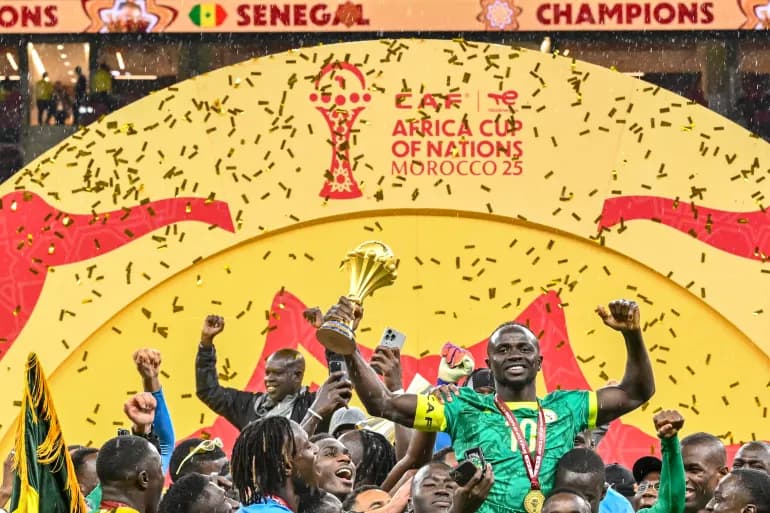
The Lions of Teranga have done it once more. In a tournament that captivated over 1.4 billion Africans and millions more worldwide, Senegal etched their name deeper into continental football history by claiming their second Africa Cup of Nations title in four years. The final whistle in Casablanca's Complexe Mohammed V didn't just signal victory—it announced the dawn of an era where Senegalese football stands undisputed at Africa's summit.
The Journey to Glory: A Campaign Built on Excellence

From their opening match against Tanzania to the nerve-wracking final, Senegal demonstrated why they arrived in Morocco as favorites and left as champions.

Group Stage Dominance

Senegal's group stage campaign was nothing short of imperious:

| Match | Result | Key Performers |
|-------|--------|----------------|
| Senegal vs Tanzania | 3-0 Win | Sadio Mané (2), Ismaïla Sarr |
| Senegal vs Algeria | 1-1 Draw | Nicolas Jackson |
| Senegal vs Burkina Faso | 2-0 Win | Iliman Ndiaye, Habib Diallo |

The Lions conceded just one goal in three matches, showcasing the defensive solidity that would become their tournament trademark. Édouard Mendy's goalkeeping excellence and Kalidou Koulibaly's commanding presence at the back created a fortress that few could penetrate.

The Road Through the Knockouts

The knockout stages tested Senegal's mettle in ways the group phase never could.

Round of 16 vs Mali:

A West African derby that lived up to its billing. Mali's youthful exuberance met Senegal's seasoned experience in a tactical battle that required extra time to settle. Sadio Mané's 107th-minute winner—a curling effort from 25 yards—sparked wild celebrations and reminded the continent why he remains Africa's most complete player.

Quarter-Final vs Cameroon:

The Indomitable Lions arrived with history and pride, but departed with respect for a Senegalese side operating at peak efficiency. A 2-1 victory, secured through goals from Iliman Ndiaye and Krépin Diatta, sent a clear message: Senegal was here to defend their crown.

Semi-Final vs Morocco:

Perhaps the tournament's most anticipated clash. Host nation Morocco, still basking in their 2022 World Cup heroics, brought the full force of their passionate supporters against Senegal. In a match that will be analyzed for years, Senegal's tactical discipline neutralized Morocco's attacking threats in a 1-0 victory. Pape Gueye's towering header from a corner proved the decisive moment.

The Final: A Masterclass in Championship Mentality

The showpiece event brought together two of Africa's heavyweight nations—Senegal and Nigeria—in what many hailed as a dream final.

 Pre-Match Tension

The build-up was electric. Nigerian supporters, believing this was their year after decades of near-misses, flooded Casablanca. Senegalese fans, confident yet respectful of their opponents, created an atmosphere that FIFA officials described as "among the best they'd witnessed."

 First Half: Tactical Chess

Both managers showed immense respect for each other's systems. Aliou Cissé employed his trademark 4-3-3, while Nigeria's José Peseiro opted for a compact 4-2-3-1 designed to frustrate Senegal's buildup play.

The opening 45 minutes saw possession battles in midfield, with Senegal enjoying 58% of the ball but struggling to create clear chances. Nigeria's Victor Osimhen was kept quiet by the Koulibaly-Abdou Diallo partnership, managing just two touches in the opposition box.

> "The first half was about patience. We knew Nigeria would sit deep and look for counters. Our job was to not give them that opportunity while waiting for our moment." — **Aliou Cissé, Post-Match Interview**

 Second Half: The Lions Unleash

Everything changed in the 67th minute.

A sweeping move that started with Édouard Mendy's precise distribution found Sadio Mané in space. The Al-Nassr star drove at Nigeria's defense before threading a pass to the overlapping Ismaïla Sarr. His cross found Nicolas Jackson, whose first-time finish gave goalkeeper Stanley Nwabali no chance.

1-0 Senegal.


 Key Player Performances

### Sadio Mané: The Tournament's Heartbeat

The former Liverpool star proved that at 32, he remains Africa's most influential player. His tournament statistics speak volumes:

- **Goals:** 4
- **Assists:** 3
- **Key Passes Per Game:** 3.7
- **Successful Dribbles:** 21

Beyond statistics, Mané's leadership galvanized a squad containing numerous talents. His work rate, tactical intelligence, and clutch performances in decisive moments exemplified championship DNA.

### Kalidou Koulibaly: The Wall

The captain led by example. His defensive statistics—zero errors leading to goals, 89% aerial duel success rate, and tournament-leading 34 interceptions—justified his status as the world's elite defenders.

### Édouard Mendy: Safe Hands

Five clean sheets in seven matches. When called upon, Mendy delivered. His save against Morocco in the semi-final, diving low to deny Hakim Ziyech's free-kick, may well be the tournament's defining defensive moment.

## Aliou Cissé: The Architect of Dominance

When Aliou Cissé took charge of Senegal in 2015, he inherited talent but not trophies. The former captain—who himself suffered AFCON final heartbreak as a player in 2002—has now delivered two continental crowns in four years.

His managerial philosophy blends African flair with European tactical discipline. Players speak of detailed video analysis sessions, meticulous set-piece preparation, and an unwavering belief that Senegalese football belongs at Africa's pinnacle.

> "This victory belongs to the people of Senegal. Every child kicking a ball in Dakar, every grandmother praying for us—this is for them. We are writing history, and we are not finished." — **Aliou Cissé**

## What This Means for African Football

### A Benchmark for Excellence

Senegal's sustained success provides a template for other African nations. Their development pathway—investing in academies, supporting players' European careers, and building team cohesion over years rather than tournaments—offers a roadmap.

### The 2026 World Cup Factor

With the expanded 2026 FIFA World Cup offering Africa nine spots, Senegal enters as favorites for one of those places. This AFCON triumph enhances their confidence heading into qualification's crucial phases.

### Inspiring the Next Generation

Across Senegal, football academies report unprecedented enrollment. Young Africans now have contemporary heroes—not just historical figures—demonstrating that continental and global success is achievable.

## Fan Reactions: A Continent Celebrates

Social media exploded following the final whistle:

**@DakarFootballFan:** "Two stars on our jersey now! The Lions are KINGS! 🦁🇸🇳"

**@AFCONAnalyst:** "Senegal's consistency is remarkable. Back-to-back tournament wins against Africa's best. Dynasty confirmed."

**@NigerianFootballPod:** "Heartbreak for the Super Eagles, but credit to Senegal. They were the better team. We'll be back."

 Celebration Scenes

In Dakar, hundreds of thousands flooded Independence Square. President Bassirou Diomaye Faye declared a national holiday. Across the diaspora—from Paris to New York, London to Johannesburg—Senegalese communities celebrated a victory that transcends sport.

 Tournament Statistics: Senegal by the Numbers

| Statistic | Value |
|-----------|-------|
| Goals Scored | 13 |
| Goals Conceded | 2 |
| Clean Sheets | 5 |
| Possession Average | 56.7% |
| Pass Accuracy | 87.3% |
| Shots on Target | 42 |
| Yellow Cards | 8 |
| Red Cards | 0 |

 Key Takeaways

1. Defensive Excellence Wins Tournaments — Conceding just twice in seven matches demonstrates that championship teams are built on solid foundations.

2. Experienced Leadership Matters — Mané, Koulibaly, and Mendy's big-game experience proved invaluable in pressure moments.

3. Tactical Adaptability — Cissé's ability to adjust formations and strategies based on opponents separated Senegal from other contenders.

4. Depth of Squad — Substitutes like Krépin Diatta and Pape Gueye made crucial contributions, highlighting Senegal's talent pool beyond the starting eleven.

5. Team Unity — In an era of club rivalries and transfer sagas, Senegal's collective spirit showcased football at its most beautiful.

 What's Next for the Lions?

The immediate focus shifts to 2026 World Cup qualification, where Senegal will aim to improve on their Round of 16 exit in Qatar 2022. With this AFCON triumph, confidence is sky-high.

Additionally, the 2027 AFCON in Kenya, Tanzania, and Uganda presents an opportunity for an unprecedented third consecutive title. Can Senegal become Africa's first three-peat champions? Based on this tournament, doubters would be brave to bet against them.

Conclusion: A Legacy Cemented

Senegal's AFCON 2025 triumph isn't merely a tournament victory—it's a statement of intent. Under Aliou Cissé's leadership, with generational talents like Sadio Mané and emerging stars like Nicolas Jackson, the Lions of Teranga have established themselves as African football's gold standard.

For a continent of 1.4 billion people passionate about the beautiful game, Senegal's success represents possibility. It demonstrates that with proper development, tactical intelligence, and unwavering belief, African football can compete with and conquer any challenge.

The Lions have roared. Africa has listened. And the world is taking notice.

---

🦁 Join the Conversation!

What did you think of Senegal's AFCON 2025 campaign? Who was your player of the tournament? Share your thoughts in the comments below, and don't forget to subscribe to AfriVerse Sports for the latest coverage of African football excellence!

**📧 [Subscribe to Our Newsletter](/newsletter)** for exclusive African sports content delivered to your inbox.

📱 Follow us on social media:

[@AfriVerseSports](https://twitter.com) | [Facebook](https://facebook.com/afriverseHQ) | [Instagram](https://instagram.com/afriverse_HQ)

---

Related Articles:

- [Super Eagles AFCON 2025: Finidi's Tactical Analysis](/sports/super-eagles-afcon-2025-finidi-tactics)
- [Top 10 African Footballers to Watch in 2025](/sports/african-footballers-2025)
- [AFCON History: The Greatest Finals Ever Played](/sports/afcon-greatest-finals-history)