Thousands of Filmmakers Take to the Streets Demanding Government Action

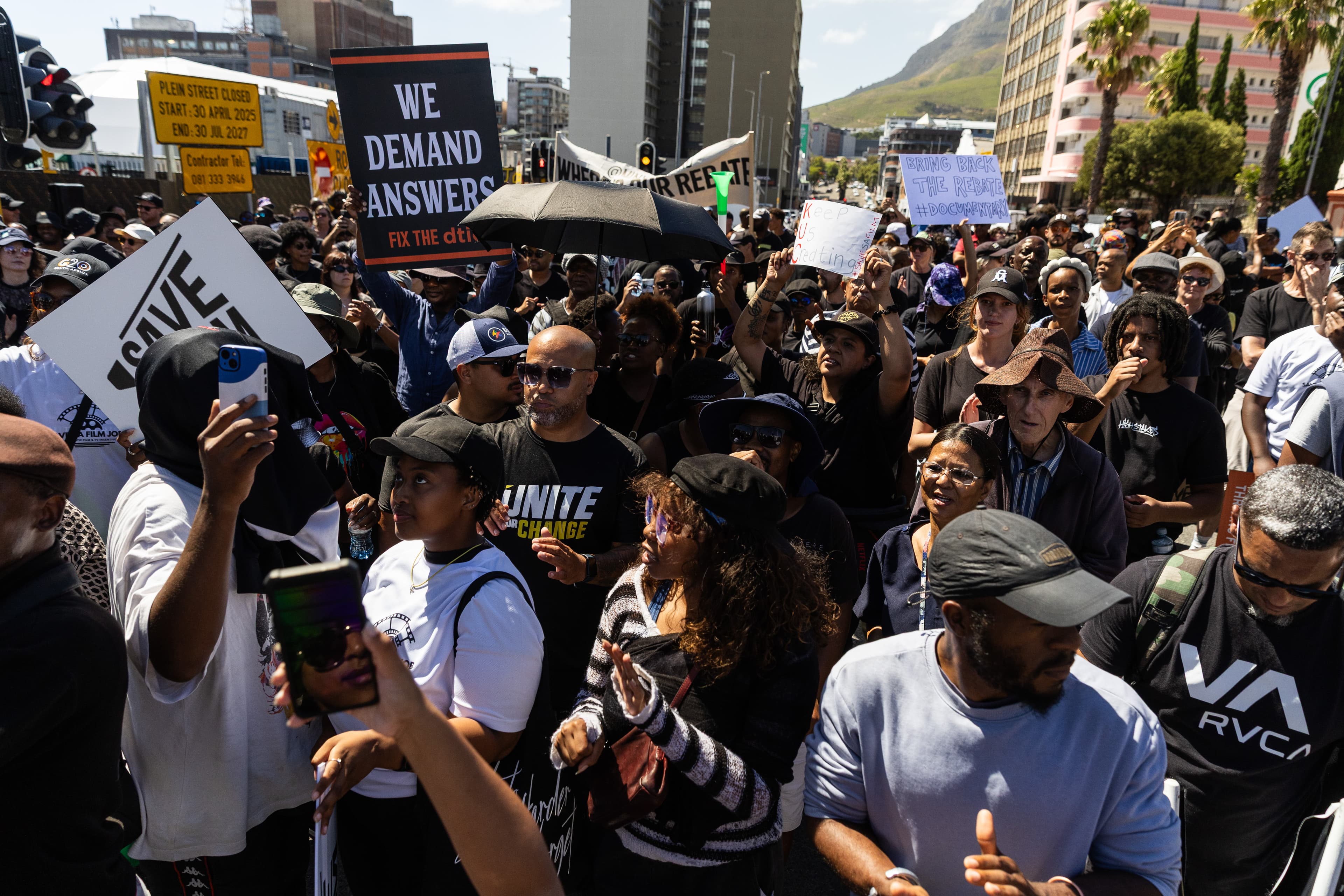
Cape Town, South Africa — The streets of Cape Town's city center came alive with a different kind of energy this week as thousands of film industry professionals gathered in a historic protest over funding issues that have plagued the South African film sector for years. From acclaimed directors to emerging screenwriters, camera operators to costume designers, the demonstration represented a unified voice demanding urgent government intervention to save an industry on the brink of collapse.

The Heart of the Crisis
The South African film industry, once hailed as the gateway to African cinema on the global stage, has been grappling with severe funding challenges that have intensified over the past several years. The National Film and Video Foundation (NFVF), the primary government agency responsible for developing and promoting the film and video industry, has faced budget constraints that have trickled down to affect every corner of the creative ecosystem.

Protesters gathered outside the Cape Town International Convention Centre before marching to the Provincial Legislature, carrying placards that read "Fund Our Stories," "African Cinema Matters," and "No Budget, No Future." The demonstration, organized by a coalition of film industry bodies including the South African Screen Federation (SASFED) and the Independent Producers Organization (IPO), drew an estimated 3,500 participants from across the Western Cape and beyond.

"We are not here because we want handouts," declared veteran filmmaker and protest organizer Thandi Modise, addressing the crowd through a megaphone. "We are here because we contribute billions to this economy, we employ thousands of South Africans, and we tell the stories that define who we are as a nation. Yet we are being starved of the resources we need to survive."

A Perfect Storm of Challenges

The funding crisis facing South African cinema is multifaceted. The Department of Sports, Arts and Culture, which oversees film industry funding, has seen its budget allocation remain stagnant while inflation and production costs have soared. The NFVF's annual budget for film production support has remained largely unchanged for nearly a decade, effectively representing a significant real-terms cut when adjusted for inflation.

International co-productions, once a lifeline for South African filmmakers seeking to produce ambitious projects, have also declined. The global streaming wars, while creating new opportunities for content, have simultaneously created challenges as international platforms often favor purchasing completed content rather than investing in local production from the ground up.

"We used to be able to piece together funding from multiple sources," explained documentary filmmaker Sipho Nkosi, who joined the protest from Johannesburg. "You'd get a bit from the NFVF, something from the DTI film incentive, maybe a broadcaster would come on board, and you could make it work. Now, every pot is either empty or has a queue stretching around the block."

The Department of Trade, Industry and Competition's film incentive program, which offers rebates on qualifying South African production expenditure, has been a crucial tool for attracting both local and international productions. However, delays in payments and administrative bottlenecks have frustrated producers, with some reporting waits of over two years to receive funds they are owed.

The Human Cost
Behind the statistics and policy debates are real human stories of talented professionals forced to abandon their dreams. Young filmmaker Zinhle Dlamini, a recent graduate of the AFDA film school, spoke about the challenges facing emerging voices in the industry.

"I graduated top of my class with a short film that won awards at student festivals. I was told I had a bright future. But there's no funding for first-time feature directors. The schemes that exist are so competitive that hundreds of applicants are fighting for one or two slots. How are we supposed to build a career?"

The crisis extends beyond directors and producers to affect the entire production ecosystem. Technical crew members, who form the backbone of any film production, have seen work opportunities dry up as fewer productions get greenlit.

"I'm a gaffer with twenty years of experience," shared Michael van der Berg during the protest. "I've worked on international productions, local features, television series. Last year, I worked only four months. This year looks even worse. People are leaving the industry entirely, and when productions do come back, we won't have the skilled workforce to support them."

Government Response and Industry Demands
Government representatives have acknowledged the challenges facing the film industry, though protesters argue that acknowledgment has not translated into meaningful action. The Minister of Sports, Arts and Culture released a statement expressing support for the creative sector while pointing to fiscal constraints affecting all government departments.

The protest coalition presented a memorandum of demands to government representatives, calling for:

Immediate Budget Increase: A 40% increase in the NFVF's annual budget allocation to bring funding levels in line with inflation-adjusted historical norms and the growing demand for support.

Streamlined Incentive Payments: Reform of the DTI film incentive program to ensure payments are processed within 90 days of claim submission, along with increased capitalization of the fund.

Provincial Film Fund Establishment: Creation of dedicated film funds at the provincial level, with the Western Cape, Gauteng, and KwaZulu-Natal establishing pilot programs.

Public Broadcaster Commitment: Mandated minimum investment by the SABC in local film production, with a requirement that a percentage of content budget be allocated to theatrical feature films.

Skills Development Investment: Increased funding for film education and training programmes, including bursaries for students from disadvantaged backgrounds and mentorship programmes linking emerging filmmakers with established practitioners.

International Treaty Negotiations: Active pursuit of co-production treaties with additional countries to expand opportunities for international partnerships, building on existing agreements with nations including Canada, Germany, France, and Italy.

The Cultural Imperative
Beyond the economic arguments, protesters emphasized the cultural importance of a thriving national film industry. South African cinema has produced works of global significance, from the anti-apartheid classics of the 1980s to contemporary successes that have premiered at major international film festivals.

"Our stories matter," insisted screenwriter Naledi Mokoena, speaking to the assembled crowd. "When we don't have the resources to tell our own stories, others will tell them for us—or worse, they won't be told at all. Every film we don't make is a perspective lost, a history unrecorded, a future unimagined."

The importance of representation in cinema has gained increased global attention in recent years, with audiences worldwide hungry for diverse perspectives and authentic storytelling. South African filmmakers argue that with proper support, the country could become a powerhouse of African cinema, exporting stories and talent across the continent and around the world.

"Look at what Nigeria has done with Nollywood, what Kenya is building, what the North African industries are producing," noted film critic and academic Professor James Sobukwe. "South Africa has the infrastructure, the talent, and the stories. What we lack is the political will to invest in our own creative potential."

International Solidarity and Industry Support
The Cape Town protest drew messages of support from filmmakers and industry organizations around the world. The Pan-African Federation of Filmmakers issued a statement of solidarity, while individual directors from Nigeria, Kenya, and Ghana shared social media posts supporting their South African colleagues.

International film festivals, including several that have historically championed African cinema, expressed concern about the situation. Representatives from the Durban International Film Festival, which has served as a crucial platform for African films, warned that continued underfunding threatens South Africa's position as a hub for continental cinema.

"We've built something special over the years," said festival director Chipo Moyo. "South Africa has been a meeting point for African filmmakers, a place where stories from across the continent could find audiences and support. If our industry collapses, it's not just South Africa that loses—it's all of African cinema."

Looking Forward
As the protest concluded and participants dispersed through Cape Town's streets, there was a sense of both exhaustion and determination among the filmmakers. Many acknowledged that a single demonstration was unlikely to resolve years of accumulated challenges, but expressed hope that sustained pressure could force meaningful change.

"This is just the beginning," promised organizer Thandi Modise as the crowd began to thin. "We will continue to advocate, to organize, to make our voices heard. We are not asking for charity—we are asking for investment in an industry that gives back to this country many times over. We create jobs, we boost tourism, we build our national identity. It's time the government recognized that and acted accordingly."

The South African film industry stands at a crossroads. With proper support, it has the potential to enter a new golden age, producing work that resonates locally and globally while employing thousands and contributing billions to the economy. Without intervention, the industry risks a slow decline that would see talented professionals scatter to other sectors or other countries, and South African stories remain untold.

The protesters have made their position clear. Now, all eyes turn to government to see whether their demands will be met with action or allowed to echo unanswered through the streets of Cape Town.

##What are your thoughts on the state of African film funding? Share your perspective in the comments below and join the conversation.